
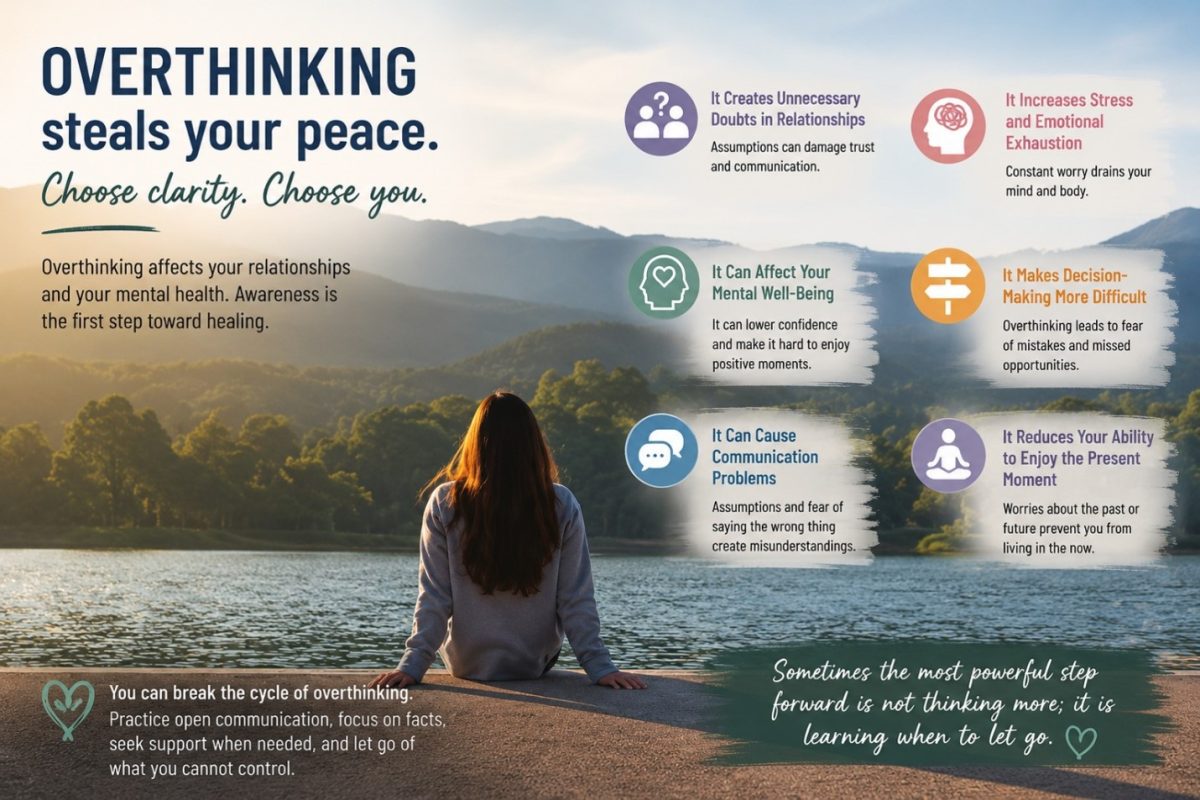
Have you ever replayed a conversation in your mind over and over and wondered if you said the wrong thing? Or spent hours imagining worst-case scenarios that never actually happened? If so, you are not alone. Overthinking is a common habit that can quietly affect both your mental health and the quality of your relationships. Although reflecting on situations can be healthy, constantly analysing every word, action, or possibility can create unnecessary stress. It can also lead to misunderstandings, anxiety, and emotional exhaustion.
It Creates Unnecessary Doubts in Your Relationships
Overthinking often causes you to read too much into every situation. A short response, a deleted message, or a cancelled plan can quickly become a source of worry. Instead of accepting simple explanations, the mind starts creating stories that may not be true. Over time, these assumptions can damage trust and communication. Constant questioning may leave your loved ones feeling misunderstood or pressured. If recurring misunderstandings become difficult to resolve, relationship counselling can provide a supportive space.
It Increases Stress and Emotional Exhaustion
Your mind needs moments of rest just as much as your body does. If you constantly analyse the past or worry about the future, your brain can become exhausted. Overthinking can lead to difficulty sleeping, reduced concentration, and increased feelings of anxiety. Instead of focusing on solutions, your mind moves around the same concerns. When you recognise the signs early, you can prevent chronic stress from affecting your overall quality of life.
It Can Affect Your Mental Well-Being
Occasional overthinking can be normal. But if it becomes a daily habit, it can significantly impact your emotional health. Constant worry may lower confidence, increase feelings of isolation, and make it difficult to enjoy positive experiences. Techniques such as mindfulness, regular exercise, and journaling can help improve your mental health. However, if you find yourself trapped in repetitive negative thinking, individual counselling in Parkwood can offer valuable guidance.
It Makes Decision-Making More Difficult
Many people believe that thinking longer leads to better decisions. However, excessive thinking can have the opposite effect. When you analyse every option repeatedly, every simple choice becomes stressful. Whether it is responding to a message or deciding on a career move, overthinking can create fear of making mistakes. It often leads to procrastination or missed opportunities as no decision ever feels “perfect.” Developing confidence in your judgment takes practice. Set responsible time limits for decisions and accept that you can not control everything.
It Can Cause Communication Problems
Overthinking often makes communication more difficult than it needs to be. Instead of expressing concerns directly, people may spend hours analysing what someone meant or predicting how they might respond. This can lead to misunderstandings, frustration, and unnecessary conflict. Sometimes, important conversations are avoided altogether because of fear of saying the wrong thing. As a result, emotions remain unspoken, and problems may grow larger over time. Healthy relationships rely on clear and honest communication. Learning to express thoughts openly rather than making assumptions can help reduce confusion and strengthen connections with others.
It Reduces Your Ability to Enjoy the Present Moment
When your mind is constantly focused on past mistakes or future worries, it becomes difficult to appreciate what is happening right now. Overthinking can prevent you from fully enjoying time with family, friends, or loved ones because your attention is elsewhere. Even positive experiences may be overshadowed by unnecessary concerns and self-doubt. This habit can leave you feeling disconnected from the people around you and less satisfied with daily life. Practising mindfulness and staying present can help you focus on what is real rather than getting caught up in endless “what if” scenarios.
You can certainly deal with overthinking. When you practice open communication, focus on facts instead of assumptions, and seek support when needed, you can improve both your mental health and your relationships. Sometimes the most powerful step forward is not thinking more; it is learning when to let go.
Leave a Reply