
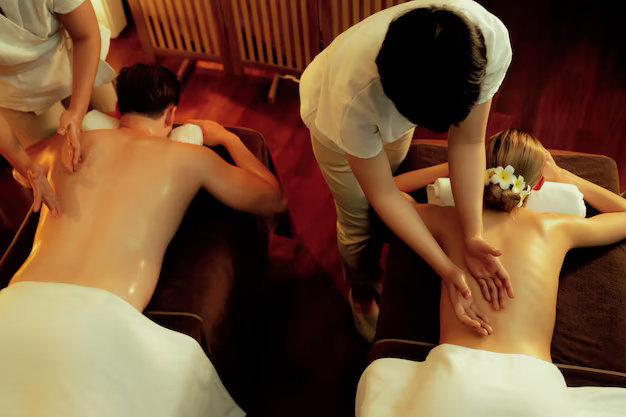
There’s a point where stress stops feeling loud and just becomes part of your everyday routine. You still go to work, still meet people, still get things done. You laugh. You talk. You keep moving. But under all that, there’s this slow heaviness building up in your shoulders, your neck, your back. It doesn’t shout. It sits quietly, waiting for you to finally notice. That’s exactly what happened to me.
It wasn’t a dramatic moment. It was just a regular morning when I tried to stretch and realized everything felt stiff. Not painful. Just… tired. Like my body had been running on low battery for too long. I remember thinking, “Maybe I need to take care of myself a little better.” That thought stayed with me through the day, and by evening, I knew I needed to do more than just stretch or rest. I needed something that helped me reconnect with my body.
That’s how I found my way back to massage.
I used to think massage was something you booked only when you were completely exhausted. But after a few different sessions over the months, I realized massage can be more like maintenance than rescue. It’s the difference between reacting and caring ahead of time. That made me curious about other techniques and cultural styles. Not because I wanted anything fancy. I just wanted to understand what my body responded to best.
Somewhere along the way, I came across discussions about traditional approaches to sensual body massage China practices. The term sounded more mysterious than it needed to, so I decided to read about it with a calm and open mind. What I discovered was surprisingly simple: many of these techniques focus on slow, mindful touch and full-body relaxation, designed to help the body release tension through warm oil, steady pacing, and a comforting sense of flow. Nothing dramatic. Nothing complicated. Just another method created to help people feel grounded and calm.
That was the first moment I realized how many cultures use massage not as a luxury but as a regular part of wellness.
The turning point for me wasn’t a bad day. It was actually a good one. I was sitting at home on a quiet evening, and for the first time in weeks, things felt calm. No rush. No stress. Just softness. But when I tried to relax my shoulders, they didn’t drop. They stayed tight, like they forgot how to loosen up.
That was my sign.
Stress doesn’t always show up as panic or burnout. Sometimes it shows up as a body that forgets how to rest.
So I booked another session. I didn’t expect anything special. I just hoped to feel a little lighter afterward.
One of the best things I’ve done is actually talk to therapists instead of just lying down quietly. They know so much about how the body works and how people hold stress without even noticing. A therapist once told me that most people carry the same patterns for years without realizing it. Some hold tension in their lower back. Some in their neck. Some in their jaw. I was definitely a shoulders-and-neck person.
That same therapist had trained under a teacher who specialized in the long-form relaxing strokes associated with massage therapist China traditions. She explained that these techniques aren’t about pressure or intensity — they’re about rhythm, warmth, and helping the body slow its breathing naturally. Listening to her talk made me appreciate how much knowledge and history goes into something as simple as helping someone relax.
It reminded me that massage isn’t just physical. It’s emotional, too.
After a few sessions spread out over weeks, I noticed something small: my breathing got deeper. Not just during the massage, but in general. When I walked or sat down to work, my chest didn’t feel tight anymore. My shoulders didn’t sit so high. My neck didn’t feel stiff every morning. These changes weren’t huge, but they were steady.
I realized that massage wasn’t fixing anything instantly. It was teaching my body how to calm down again.
Some changes I noticed:
None of this happened in a dramatic “before and after” moment. It was quiet progress. The kind that sneaks up on you in the best way.
I tried deep pressure, light pressure, warm oil, stretching, and slow rhythmic techniques. Each had its own benefits. But I learned something important along the way:
Even the best technique means nothing if you don’t feel comfortable.
Comfort is everything.
A therapist who checks in without interrupting.
A room that feels safe.
A pace that doesn’t feel rushed.
A tone that isn’t clinical or cold.
A presence that feels gentle rather than mechanical.
Those things matter more than any specific style.
Massage is personal. Your body can only let go when your mind feels safe enough to let it happen.
If you’ve ever tried to relax and found that your body just wouldn’t do it, you’re not alone. Letting go is a skill. One most of us never learned properly.
Massage helps you practice that.
Not through force.
Not through intensity.
Through slow reminders.
A warm hand.
A long stroke across tense muscles.
A quiet moment where breathing softens.
A gentle release you didn’t notice building up.
These moments teach your body how to relax again, and once it learns, it remembers.
If you’ve been thinking about getting a massage but keep waiting for the “right time,” this is your sign that any time can be the right time. You don’t need to be overwhelmed or exhausted to deserve rest. Your body doesn’t need to be in pain to be cared for.
Massage isn’t about fixing you.
It’s about meeting yourself where you are.
Tired or calm. Busy or quiet. Heavy or light.
Life doesn’t slow down on its own.
But you can slow down yourself — even just for an hour — and your body will thank you for it in ways you feel every day.
When you’re ready, give yourself that pause.
Your shoulders will feel it.
Your mind will feel it.
And maybe, like me, you’ll learn that your body has been waiting for that moment longer than you realized.
Leave a Reply